Abstract
Compares full-scale original and auxiliary-column-reinforced models of the most inclined outer-ring forked column on the second open level, focusing on stiffness, energy dissipation and failure.
Use note
本站原创阅读摘要;本次核验范围:Abstract / Introduction研究对象及范围声明。非原文全文或逐字译文,原图授权另核。
Source excerpts
Research question and scope
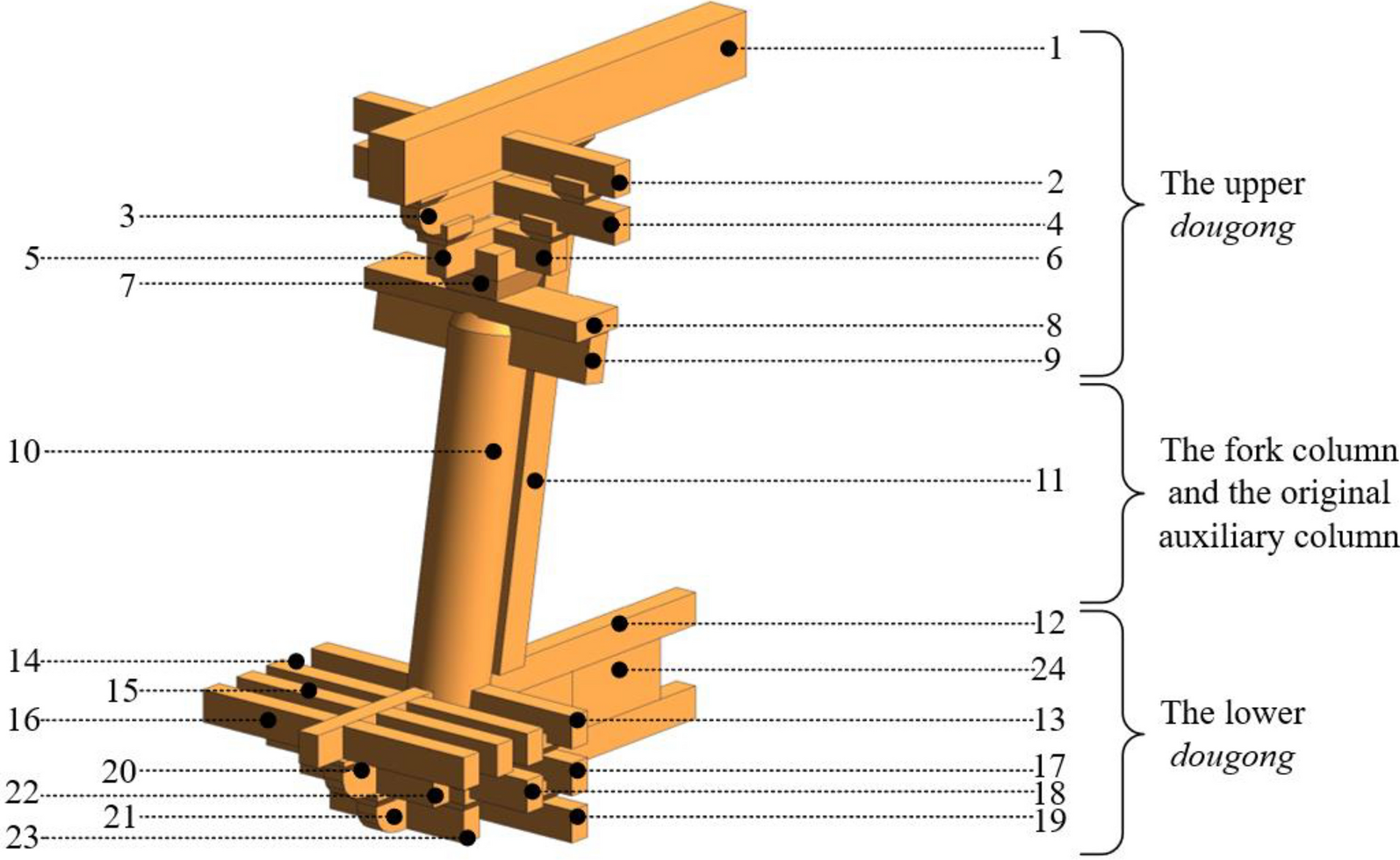
The study selects forked column No. 23, the most inclined outer-ring column on the second open level, and constructs full-scale systems containing upper and lower bracket sets, the inclined column and original or auxiliary vertical columns to compare seismic behaviour.
https://link.springer.com/article/10.1186/s10086-025-02250-9 · Abstract / Introduction研究对象及范围声明 · 核验日期:2026-10-15Materials, methods and evidence
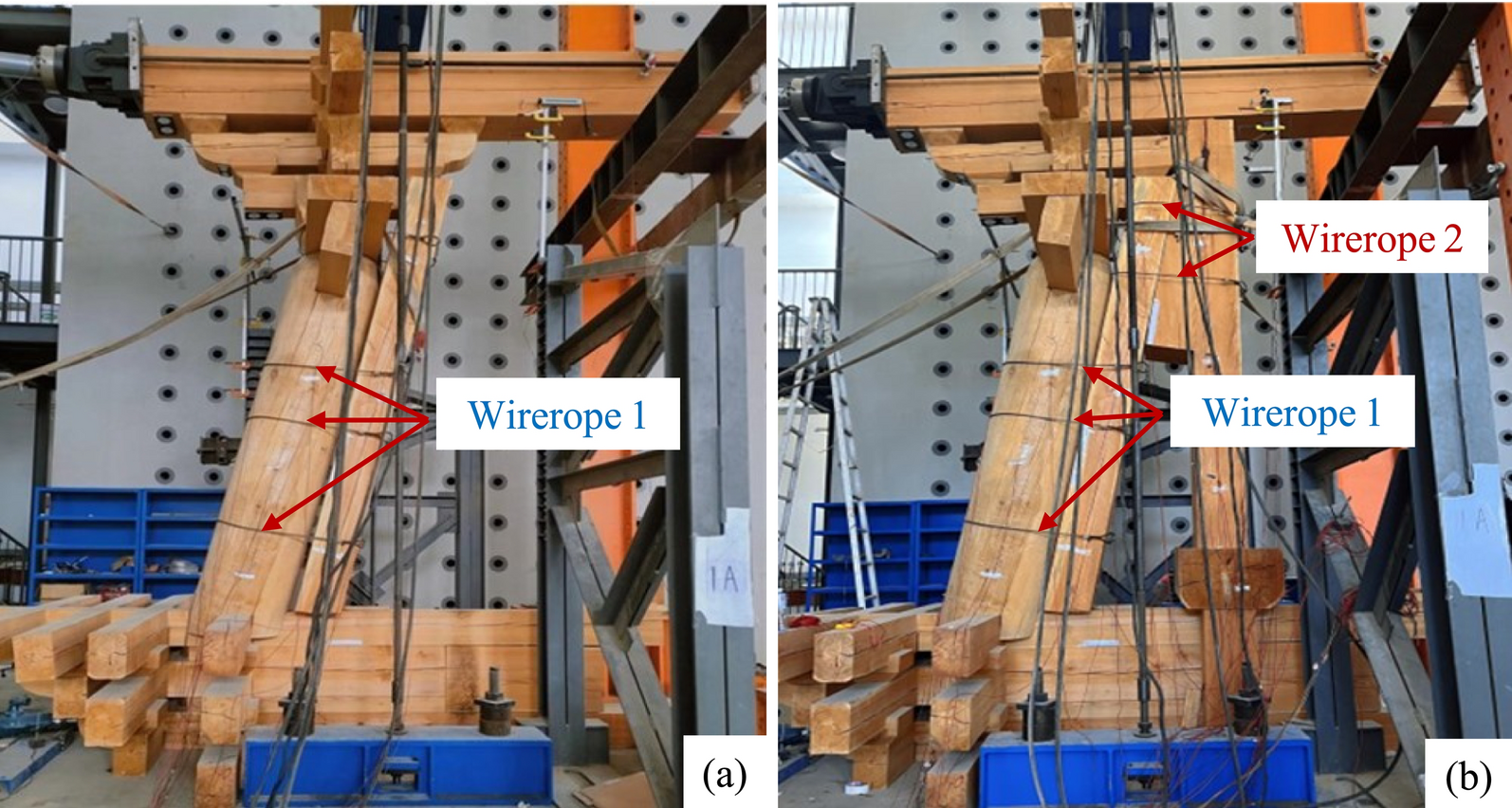
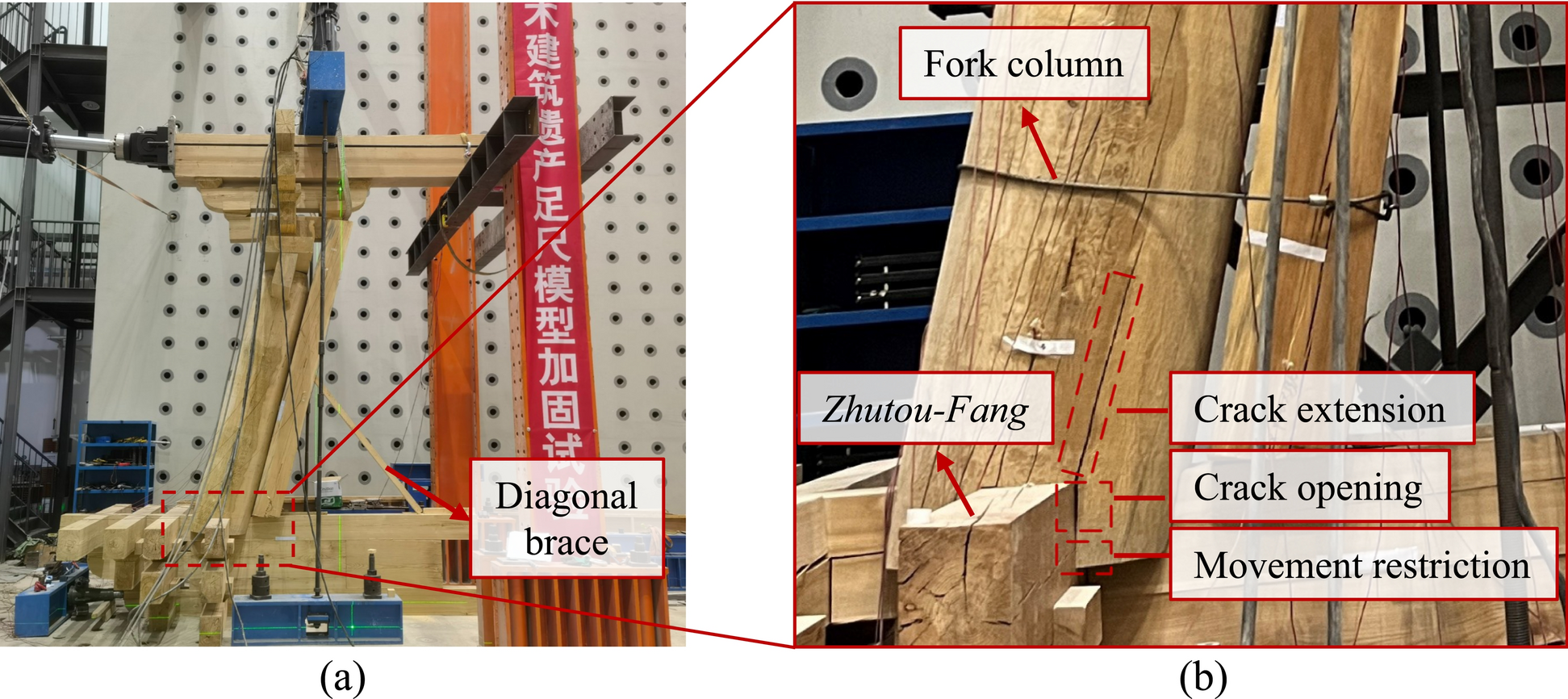
The models retain an initial inclination of 10.23 degrees and use the same timber species. Under vertical load they undergo low-cycle reversed horizontal loading; after damage to the original model, an added auxiliary column forms the reinforced model. Rotation, slip, capacity, stiffness degradation and energy dissipation are recorded.
https://link.springer.com/article/10.1186/s10086-025-02250-9 · Abstract / Introduction研究对象及范围声明 · 核验日期:2026-10-15Limits and further reading
The reinforced model shows substantially higher stiffness and dissipation, but this is a full-scale component-system test at one location under specific boundaries and loading, not an intervention already carried out on the pagoda. Authenticity, reversibility, construction disturbance and global load redistribution still require assessment.
https://link.springer.com/article/10.1186/s10086-025-02250-9 · Abstract / Introduction研究对象及范围声明 · 核验日期:2026-10-15