

Abstract
Uses microscopy, elemental analysis, infrared spectroscopy and XPS on ancient pagoda timber to identify lignin oxidation and surface-section loss under long-term sunlight and oxygen exposure.
Use note
本站依据所列原始来源撰写的中文阅读摘要,不是原文全文或逐字译文。图片许可须按原图注单独核对。
Source excerpts
Research question and scope
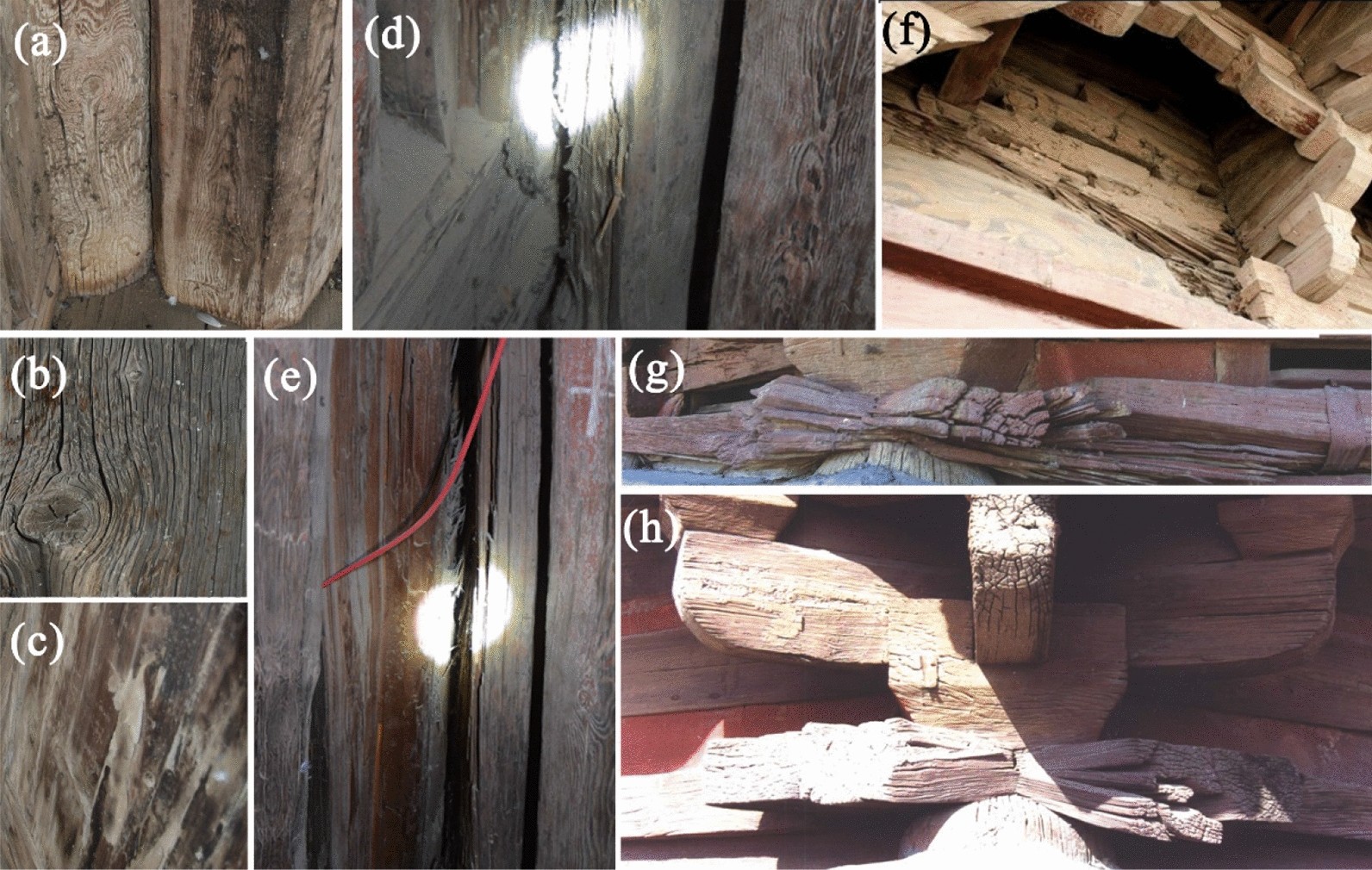
The paper explains surface deterioration of the pagoda's ancient wood in a warm, dry and strongly sunlit environment. It connects visible cracking, powdering and section loss with cell-wall damage, elemental changes and chemical degradation of lignin and hemicellulose.
https://www.nature.com/articles/s40494-023-00956-x · Abstract / Rights and permissions · 核验日期:2026-10-15Materials, methods and evidence
Eight samples from concealed locations or detached fragments on levels other than the first were compared with modern wood of the same species using scanning electron microscopy, elemental analysis, ATR-FTIR and XPS. Multiple indicators point to surface oxidation and lignin loss, with substantial variation among samples.
https://www.nature.com/articles/s40494-023-00956-x · Abstract / Rights and permissions · 核验日期:2026-10-15Limits and further reading
The sample is small, and location, orientation, exposure and repair history affect each result; no single fragment should grade the whole tower. The study supplies mechanistic evidence for non-destructive testing, material parameters and coating research rather than a direct treatment prescription.
https://www.nature.com/articles/s40494-023-00956-x · Abstract / Rights and permissions · 核验日期:2026-10-15