Abstract
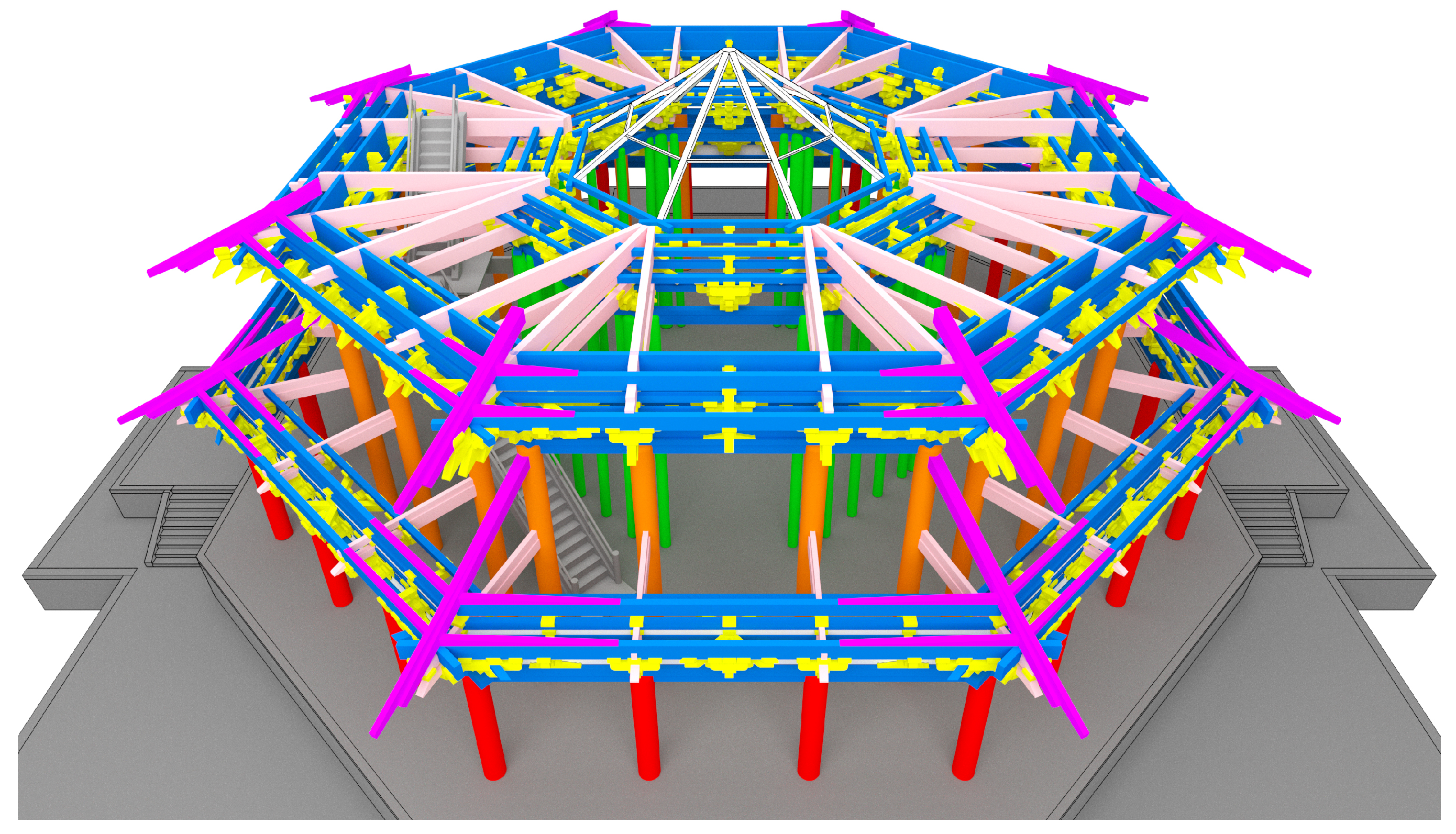
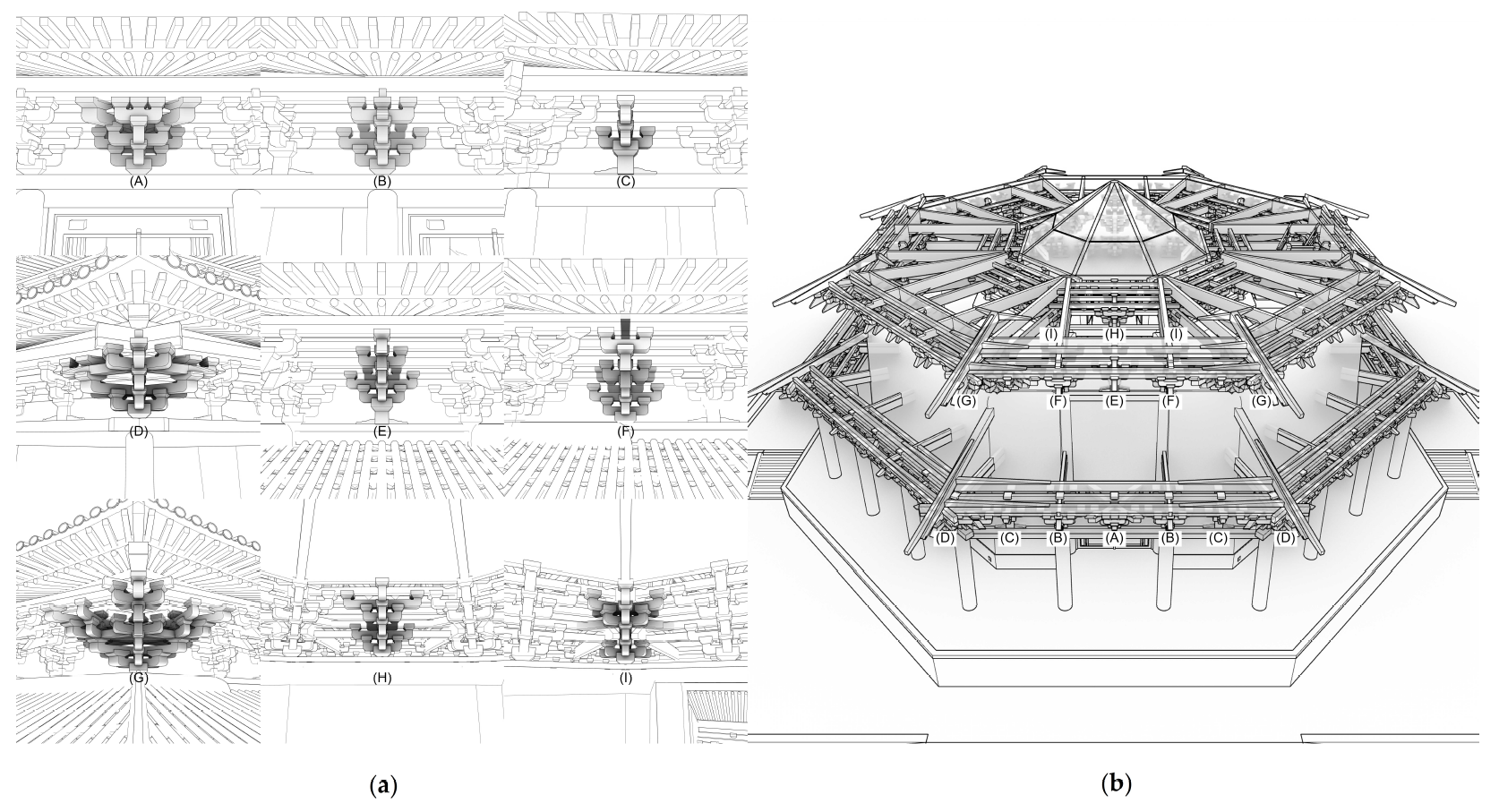
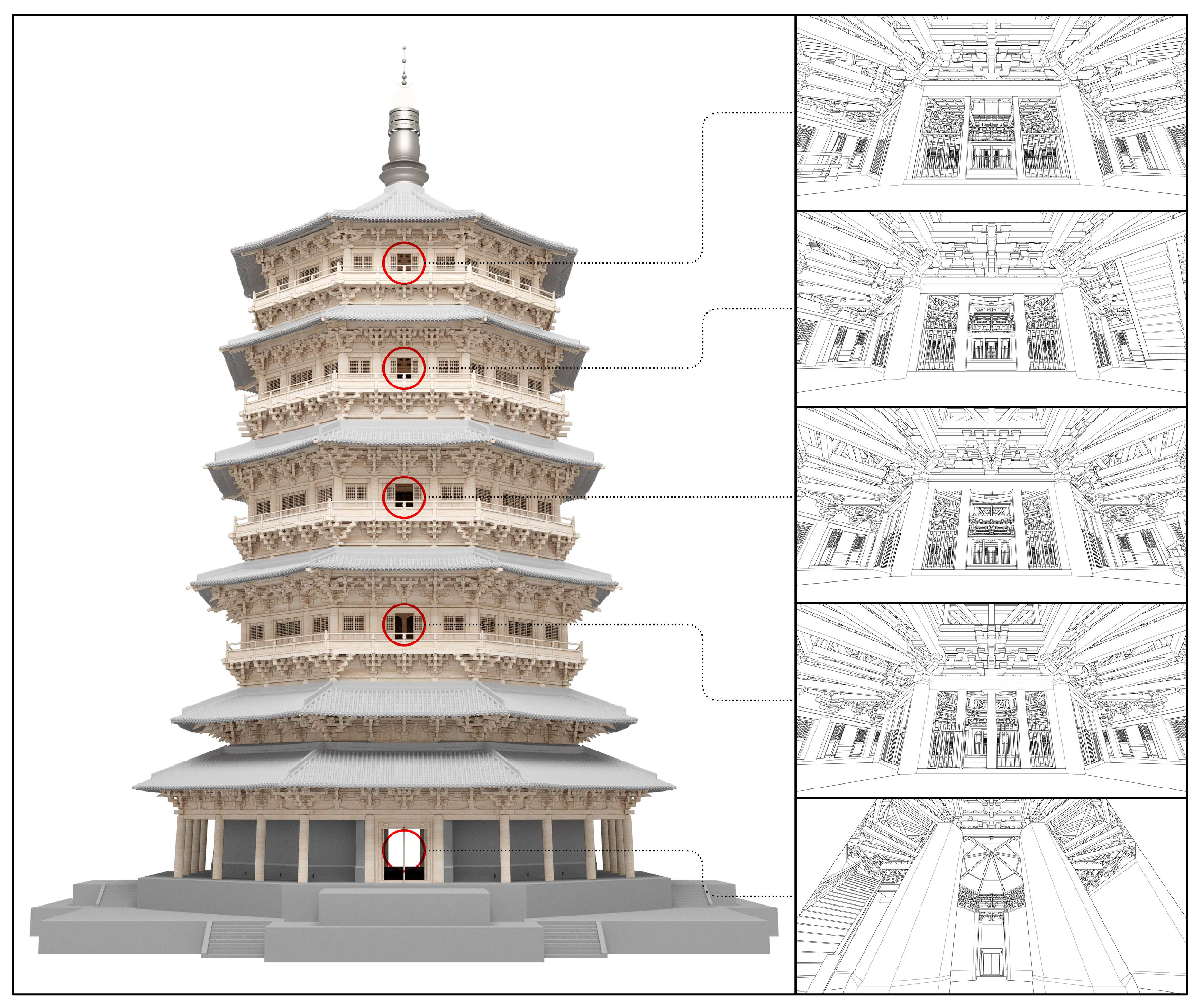
Builds a parametric digital model with more than thirty thousand components to explain column grids, vertical connections, bracket generation, inward inclination and rising column heights.
Use note
本站原创阅读摘要;本次核验范围:本地出版者原版PDF首页、Abstract、Data availability。非原文全文或逐字译文,原图授权另核。
Source excerpts
Research question and scope
The paper uses column grids and bracket sets as the core of a scale-responsive parametric model. Beyond exterior form, it organises successive column positions, bracket types, hidden-level bracing and component connections as inspectable data.
https://doi.org/10.3390/buildings14082464 · 本地出版者原版PDF首页、Abstract、Data availability · 核验日期:2026-10-15Materials, methods and evidence
The workflow compiles references, generates column grids and bracket families, and assembles other structural and non-structural elements. The published model contains more than thirty thousand components and supports analysis of two-directional inward inclination and vertical setback of the outer columns.
https://doi.org/10.3390/buildings14082464 · 本地出版者原版PDF首页、Abstract、Data availability · 核验日期:2026-10-15Limits and further reading
This is a rule- and literature-based digital reconstruction, not a direct copy of a condition point cloud. Standardised components and geometries cannot replace records of deformation, damage and later repair; the archive therefore selects author-made model figures and preserves their original figure numbers.
https://doi.org/10.3390/buildings14082464 · 本地出版者原版PDF首页、Abstract、Data availability · 核验日期:2026-10-15